Showing posts with label Business Environment. Show all posts

Friday, February 15, 2019

Comparative advantages for investing in Liangjiang New Area Chongqing China

1. Gigantic opportunities in Western Development

Compared with Pudong and Binhai which are coastal open cities, Liangjiang New Area has switched its development orientation from the coast to the inland areas, with the aim of implementing China's western development strategy. Chongqing is one of the four municipalities directly under the central government and one of the five state central cities. It is fully committed to establishing itself into a modern metropolis covering an area of 1,000 square kilometers with a population of 10 million. Liangjiang New Area is expected to become an essential area for Chongqing's development and construction. By 2020, 60 percent of Chongqing's industrial land (171km2), 40 percent of its commercial land (125km2) and 60 percent of public land (108km2) will be located in Liangjiang New Area - which will also account for half of Chongqing’s population.

Comparative advantages

2. Policy environment oriented with domestic consumption

Pudong and Binhai are heavily dependent on international trade - which is their main source of revenue. By 2015, China's consumption will take up more than 14 percent of that worldwide. China will become the world's second largest consumption market with one fifth of the world population. Liangjiang New Area focuses on domestic consumption in its plans for development. The key industrial projects invested in Liangjiang Industrial Development Zone will benefit from the preferential policies and support in addition to the five major policies - China's western development policy, Innovative Balancing of the Urban and Rural Overall development policy, the State Council's No. 3 about import and export policy, inland bonded port areas policy, as well as the current policies in Pudong coast and the right to pilot implementation.


3. Relatively low elemental costs, with a focus on "6 lows"

1). Low construction costs with the cost of industrial land and construction tax significantly lower than in the country' eastern regions;

2). Low logistics costs, with convenient transportation enjoyed by Liangjiang New Area, especially its close linkage with 16 big cities through the "golden waterway" of the Yangtze River;

3). Low production costs with the comprehensive costs of industrial water, electricity, gas, land, labor etc. accounting for only 60 to 70 percent of the cost in the eastern regions, and especially cost of labor, as Chongqing has a total of 620,000 students in 61 colleges, 500,000 students in 248 secondary and vocational schools and 3,929 in vocational and technical training institutions - with 300,000 talents available for job placement and 8 million migrant workers;

4). Low financing costs due to a variety of financial institutions and new financial products in Liangjiang New Area which provide fast and convenient financing;

5). Low official business costs with a provincial review and approval system and administration authority - which lower the comprehensive costs of production and living in Liangjiang New Area - and they are thus significantly lower than in the eastern regions;

6). low tax costs with various preferential policies.


4. Opening model of inland openness

The two processing trade modes developed by Liangjiang New Area, i.e. "one end in and one end out" as well as "both ends in," elevate the utilization of foreign capital and attracts leader-type and core-type large-scale transnational enterprises to base their functional projects, such as regional headquarters, R & D institutions, merchandise distribution centers, purchasing centers, settlement centers, etc. in the Liangjiang New Area. In terms of service trade, the Liangjiang New Area has been active in developing offshore finance and transit trade, constructing its offshore financial center and the largest transit trade port in the western regions, and striving to create a national export base of automobiles and parts, a national innovation base of pharmaceutical exports, a national base of service outsourcing industry, and the largest bonded base of warehouse and logistics in inland China.


5. Ecological new area with reform

Liangjiang New Area is more than an industrial development zone, because of its bigger population and better ecological conditions. In terms of the mode of development, Liangjiang New Area adheres to the concepts of low carbon economy and independent innovation and works to strengthen resource conservation and environmental protection - in order to build a new area with a beautiful environment and good ecology. In terms of urban constructions, Liangjiang New Area continues to make plans based on global perspectives and high international standards. In terms of the industrial park development, Liangjiang New Area makes innovations in its management system, tax system, land system, social security system and environmental protection system so as to attract various kinds of enterprises and projects in the industrial park. Its exploration and practice in the mechanism of ideas, modes, channels, and systems, are set to allow Liangjiang New Area to become a site for the demonstration of scientific development.



Wednesday, January 30, 2019

Chongqing: A Booming Mega City in the Interior


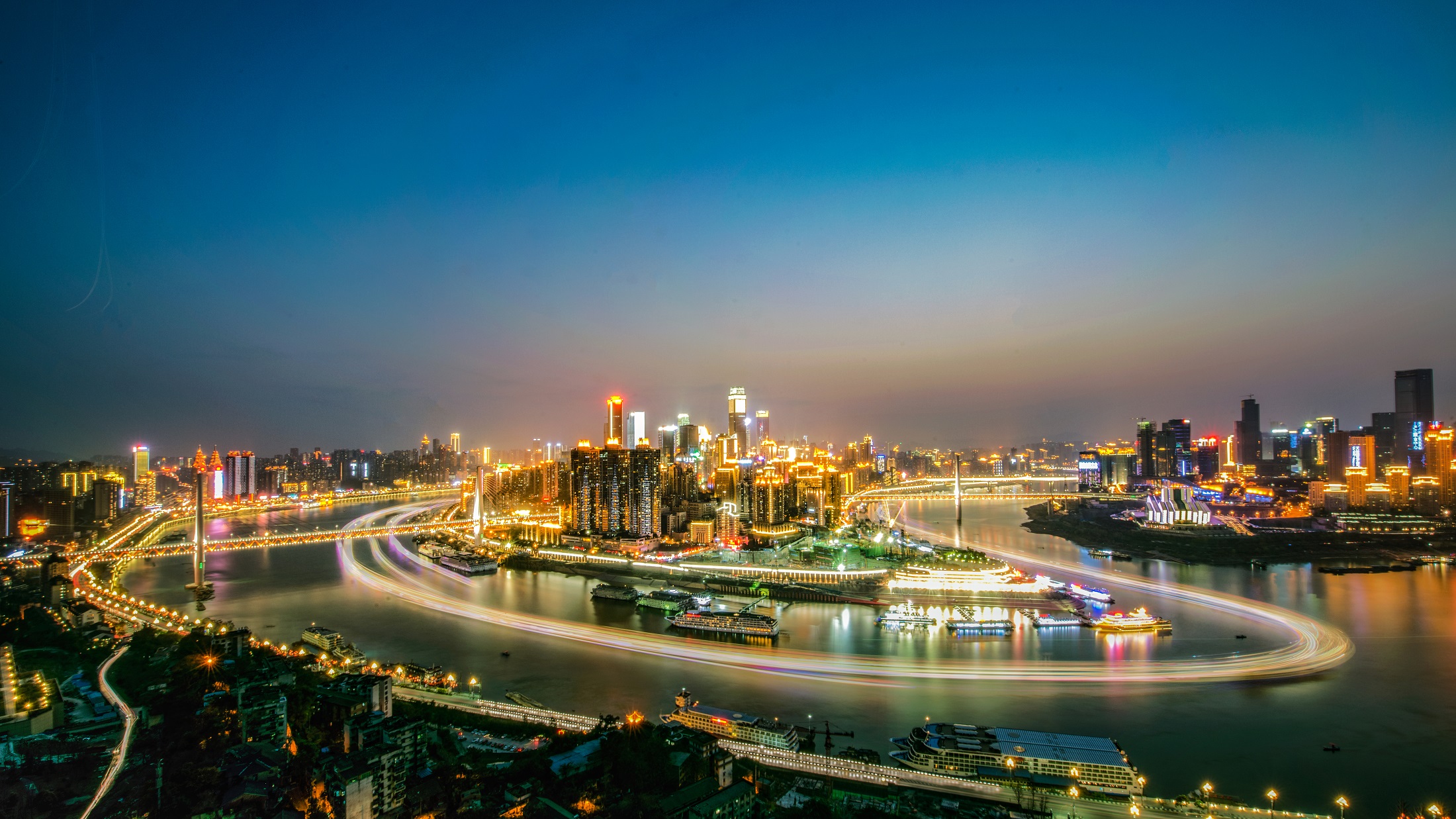
One of the biggest cities in the world, with over 30 million people, Chongqing is an exciting metropolis.  Few places in China, or anywhere else can claim an annual GDP growth rate of at least 10 percent for well over a decade.  For me, Chongqing is rather like a small province, with a core city of over 8 million people.  Economic growth began to take off spectacularly since Chongqing became its own municipality, separate from Sichuan province in 1997. 

With a history stretching 3,000 years, Chongqing has been an important political, economic and strategic centre in China’s west.  It is known as “mountain city” owing to its rugged terrain and steep gorges.  The rest of the country also calls it one of China’s four “furnaces” as it becomes hot and humid in summer.  The Yangtze River starts here and winds through the municipality and makes its way towards Shanghai on the eastern seaboard more than 1,600 kilometres away.

The Chinese Government has designated Chongqing as a key hub in western China, making it a bridgehead for economic development in the vast interior. As a result, Chongqing has benefited from Beijing’s policies such as the Go West strategy, the Chongqing Liangjiang New Area, the Yangtze River Economic Belt, the Belt and Road Initiative and the Chengdu-Chongqing Cities Cluster Development Strategy, as well as the establishment of a Chongqing Pilot Free Trade Zone. 

Chongqing is China’s biggest producer of automobiles with an annual production of over 3 million vehicles in 2016.  It also produced more than 8 million motorcycles.  Incredibly, Chongqing produced 58 million laptops – one third of the world's production in 2016. It also produced 280 million mobile phones that year, which was 15 per cent of China’s total mobile phone production. 

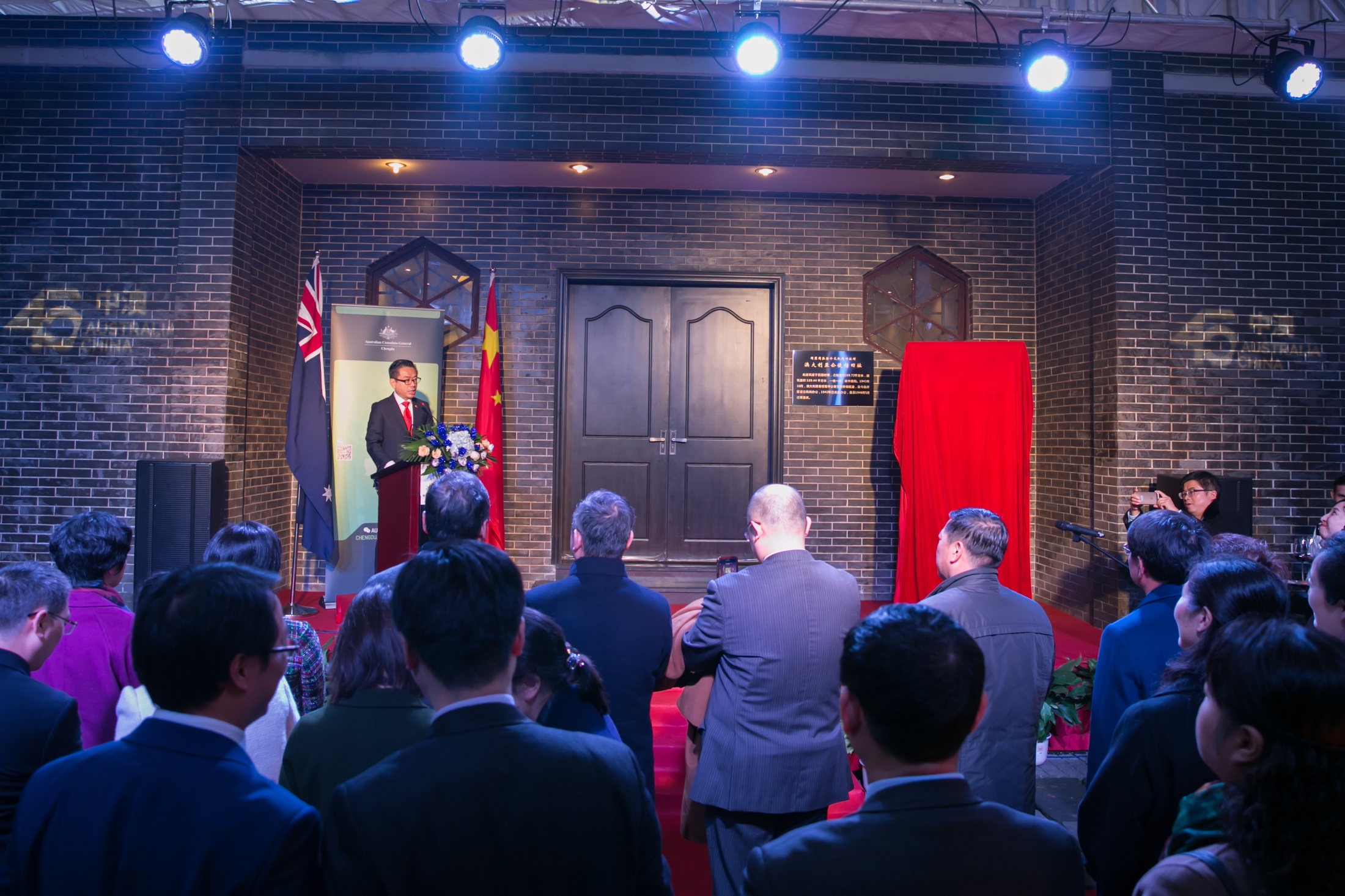
Chongqing has a special historical link to Australia – it was where we established our first diplomatic mission in China from 1941 to 1945 (see my blog of 1 September), as we began to formulate our own foreign and trade policy.  At that time, our Legation in Chongqing was our third overseas mission, indicating how important China was to Australia even then, as we navigated a foreign policy that was distinct from the Britain. 
Consul-General Christopher Lim hosting a reception to celebrate the 45th anniversary of Australia-China diplomatic relations at the old Australian Legation building in Chongqing

Today, Chongqing has become an increasingly important trading and investment partner for Australia, and a rapid growing source of tourists and students.  As you find Sichuan restaurants popping up across Australia, remember that Chongqing is the origin of the famous fiery dining experience – the Chongqing hotpot! 

Australian goods and services in demand
But in what areas would Australians find business opportunities in this huge and fast growing city?  Naturally, our food and beverage products are highly sought after here.  For example, our beef is considered the best quality for hotpot, our infant formula from Australia continues to do very well amidst strong competition, and of course our high quality wine is catching on quickly among Chongqing’s growing middle class.  But there are also companies such as Eastern Elevators that has made progress in Chongqing.  The company manufactures and distributes high-tech commercial lifts throughout China and beyond, and has recently launched an intelligent parking system.  Also, what is not obvious to most of us is our large exports of iron ore, which constitutes our biggest merchandise export to Chongqing.
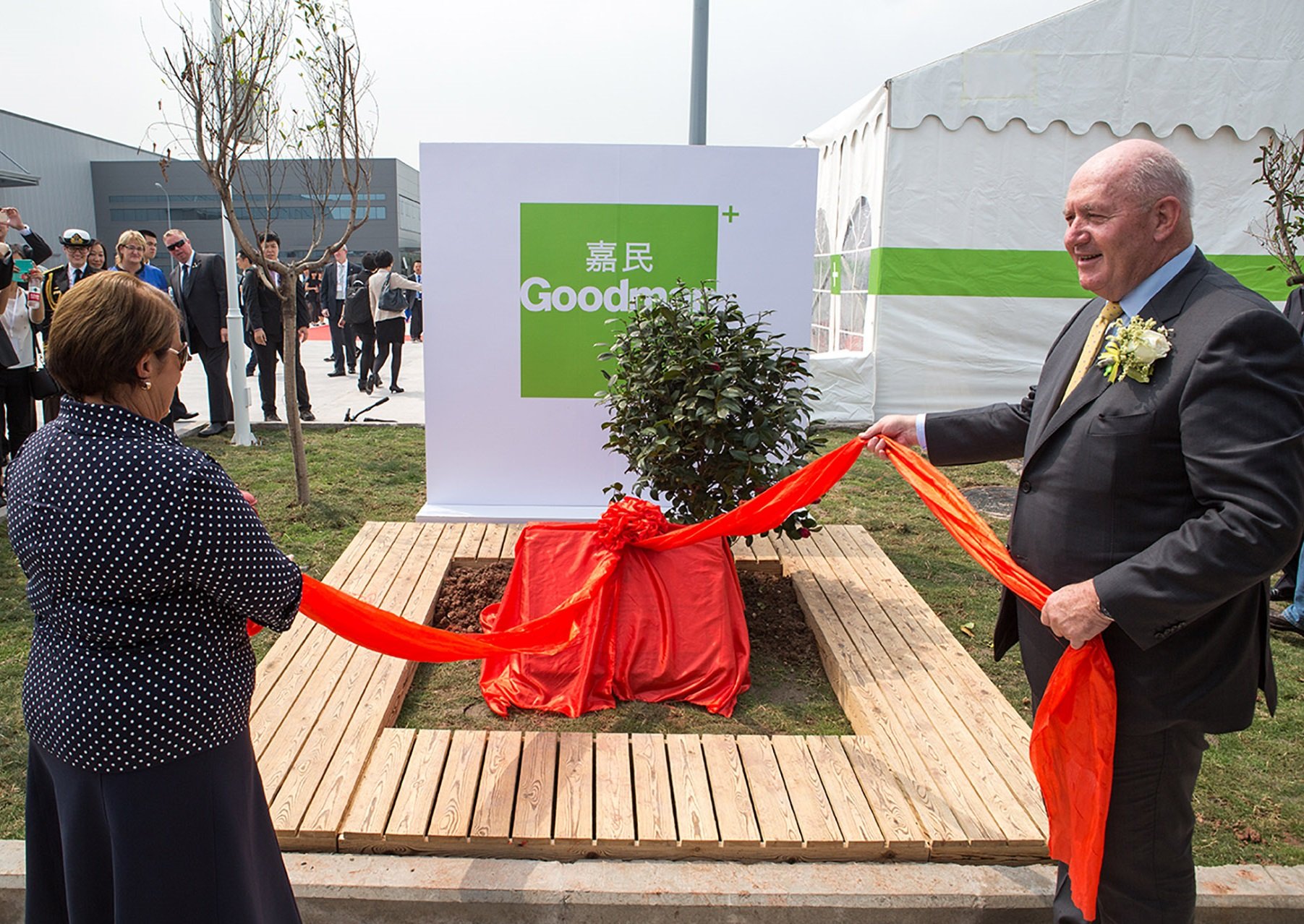
Governor-General Sir Peter Cosgrove and Lady Cosgrove opening Goodman's Chongqing Jiangbei Airport Logistics Park

The services sector has grown by leaps and bounds.  Tourism has benefitted with direct flights from Chongqing to Sydney and Melbourne, taking place five days a week.  Australian logistics and real estate company Goodman has five warehousing facilities in Chongqing, taking advantage of its role as a river, air, rail and road transportation hub.  Goodman’s clients include online giants such as Alibaba and JD.com.  Education continues to be an area of huge potential for Australia, where a number of higher and vocational education providers have made considerable contributions (see my separate blog here). 

So if you’re thinking of doing business in China, Chongqing may well be your market.  And if you’re a student or tourist, Chongqing offers a fascinating window into China’s economic development in the rapidly growing inland provinces. 

Foreign Investment Booms in Chongqing


A bird view of the Liangjiang Special Economic Zone in Chongqing. [Photo: kaiwind.com]

The creation of a Special Economic Zone in the southwestern Chinese municipality of Chongqing is being credited with creating a major influx of foreign investment through new funding streams, tax breaks and favorable policies, which are designed to try to speed up economic development.

On the 33rd floor of a modern skyscraper in the heart of Chongqing's financial district you'll find the offices of ENGIE – a Sino-French venture which develops electricity, cooling and heating services for industrial companies.

Doctor Zhang Jinbai is the company's Chongqing representative.

"Chongqing is really the hot topic in China and a lot of foreign investors, and not only foreign investors, domestic investors entering the Chongqing market – how we can find a balance to allowing the foreign investors to invest and in the meantime to balance the interests of the different parties."

Zhang says the potential for growth, as well as the flexibility within the municipality areas of policies and finance, has been key to the company's development in China.

"Chongqing is the most dynamic city in China and also the Chongqing government has just signed the Sino Singapore initiative demonstration program here and located in Chongqing so we think there are a lot of opportunities, airport, IT, financial activities, and as an energy player we think we can bring our exercise and our capability of investment."

Financial service is one of four priority areas of the China-Singapore initiative which focuses on connectivity and modern services.

There are currently 246 Singaporean companies doing business in Chongqing, making the city-state the biggest investor in the Chongqing among all foreign investors.


Wu Shicun is with the Singaporean Business Association in Chongqing.

"There are several advantages in Chongqing. First, this is a very big municipality with a big population and land base. More importantly, the government has given a lot of encouragement to us in doing investment projects here. Also with the operation of Yuxinou railway, there has been great improvement in the field of logistics, international finance and trade."

That government encouragement is channeled through the Liangjiang Special Economic Zone – one of only three in China – behind only Shanghai's Pudong New Area and Tianjin's Binhai.

It was set up in June 2010, and is located in the main urban districts of Chongqing, north of the Yangtze River and east of the Jialing.

The zone itself covers 12-hundred square kilometers.

Automobile production, electronic information and equipment manufacturing have been the three major industries driving economic growth in the zone.

But in the next five years, another 10 new industries are expected to rise in Liangjiang.

They include intelligent vehicle manufacturing, smart devices, cloud computing, and bio-medicine.
Tang Zongwei, deputy director of the management committee of the Liangjiang New Area, says they have a lot of ambitions moving forward.

"In terms of adjusting the industrial structure, our goal for the Liangjiang New Area is that by the year 2020, the output value of the three traditional industries will reach 600 billion yuan, while the output value of the other new, emerging industries will reach 450 billion yuan. Within the new industries, we want to achieve 80 billion yuan in new energy vehicle manufacturing."

The figures speak for themselves…

The GDP of the area was put at 320-billion yuan in 2015.

By 2020, officials expect the Liangjiang New Area's GDP to hit 650-billion yuan, with industrial gross output coming in at 1 trillion yuan.

Foreign investment eyes Chongqing's connections

Image result for chongqing

Diplomats see the traditionally competitive cities in southwest China, Chengdu and Chongqing, as instrumental in developing the economic power of the region, expecting more foreign investment and cooperation opportunities.
"About 500 German companies are about to invest in the southwestern region in the next three to five years, especially in Sichuan and in Chongqing. The figure accounts for 10 percent of German companies already engaged in China," said Jens Kraus-Masse, deputy consul general of the consulate general of Germany in Chengdu, after the opening of the Chongqing People's Congress - the local legislature - on Sunday.
Kraus-Masse agrees that Sichuan and Chongqing are competitors. However, he sees the competition as an opportunity to drive the development of the whole region.
"The competitors are able to attract much investment, enough to develop the secondary cities in this area. The entire entity can therefore create an economic and social development center," he said.
"In Germany, there are also major cities in this competitive situation. In our case, the major cities also attract much investment, enough to develop the small cities. The region as a whole has been developed," he said, adding that the consulate attempts to develop the whole region, aiming to make it a stronger economic entity.
Tamas Hajba, consul general of the consulate general of Hungary in Chongqing, echoed his German counterpart's views, saying that the two cities cannot be separated.
"The central government has decided to open up the area and establish the Chengdu-Chongqing Economic Zone, aiming to develop the economy in this region," he said.
He also said all of Europe is pursuing ore investment and cooperation in the southwest region of China, as is Hungary itself.
"This region is maintaining a fast pace of development. Compared with the coastal areas, there are more opportunities. The growth in gross domestic product is very high," Hajba explained.
He also believes that less competition and lower costs are key drivers for European companies to move to the southwest.
"Many big companies and countries have already invested in big cities in China and coastal cities. There will be strong competition with them if they settle there. However, the competition in the southwest region is comparatively less," he said, adding that the southwest region provides lower labor, energy and property costs than coastal cities.
He estimated the cost in Chongqing might be 30 to 40 percent lower than that in coastal areas.
Companies are also showing their interest in the region.
The former prime minister of Sweden, Goran Persson, led the Sweden-China Trade Council Green Tech delegation to Beijing and Chongqing in January, to discuss possible cooperation opportunities.
He told China Daily the reason for companies choosing Chongqing was because of its highly ambitious economic growth in this region.
"I'm extremely satisfied with the active and strongly growing region," he said.
In the first three quarters of 2013, Chongqing's GDP growth was 12.4 percent, ranking it third in China.
Its full-year GDP is expected to reach 1.3 trillion yuan in 2013, according to the Chongqing Foreign Trade and Economic Relations Commission.
Exports and imports amounted to $68.7 billion in 2013, ranking it 10th in China and first in the midwest region.
Persson also values Chong-qing as a center of convenient logistics.
"Chongqing is a transportation center, connecting the world with the ocean and railways. The railway connecting to Europe provides a convenient logistics choice to companies," he said, adding that Chongqing has an open attitude to foreign investment.


By Luo Wangshu and Ji Jin in Chongqing (China Daily)Updated: 2014-01-21 14:06

China's Chongqing is being transformed into global investment destination, attracting international projects and talent

Image result for chongqing

CHONGQING, ChinaAug. 21, 2017 /PRNewswire/ -- Most recently gaining international stature as the eastern terminus of the Chongqing-Sinkiang-Europe International Railway connecting Eurasia, the city of Chongqing in the western part of China has maintained its leading position in terms of GDP among the country's provinces and direct-controlled municipalities for 13 consecutive quarters. The city has not only become one of the regions in the country experiencing the fastest economic growth, it is also the world's largest laptop manufacturing base and the country's largest automobile production base. The city is currently hosting the Chongqing International Talent Innovation Entrepreneurship Symposium, the grand international gathering event for professionals worldwide, with the mission of recruiting the best that the world can offer in term of talent from all over the world.
Since 2014, Chongqing has maintained a double-digit GDP growth rate, topping China's other provinces and cities, creating the "Chongqing" phenomenon passionately discussed by the country's financial and business communities.
The rapid economic growth coupled with an industrial restructuring has led to the inland city's strong demand for talent. By 2020, the city's key emerging industry segments are expected to need over 60,000 R&D specialists, 80,000 IT professionals and 110,000 individuals with skills in other sectors, translating into a recruitment drive calling for more than 250,000 skilled talents.
Considering the increasing cost of living in the country's eastern provinces and cities, many professionals from these regions have chosen to relocate to some of the country's inland cities, including Chongqing. With the amount of investment that has been heaped on the latest hotspot, Chongqing Liangjiang New Area, the city has become very attractive to the China's young generation of university graduates. Similar to Shanghai Pudong New Area and Tianjin Binhai New Area, Liangjiang New Area, located at the intersection of one of the main routes of the One Belt, One Road initiative, the Chinese government's program to enhance ties with the countries of Eurasia, and the Yangtze River Economic Belt, has become an area targeted by the central government for major development. Since 2010, the new area has been attracting foreign investment amounting to, on average, US$4 billion per year. The ongoing inflow of talent and capital is contributing to the city's drive to transform itself into an international hub and port connecting the Yangtze River Belt to Central Asian and European markets.
With the demands being created by the city's ongoing growth and the continuing influx of talent, Chongqing has identified the advantages that differentiate it from other rapidly growing cities as well as its unique requirements in terms of the rapidly increasing need for a professional workforce. The city is again hosting the Chongqing International Talent Innovation Entrepreneurship Symposium this year, attracting some of the world's top professionals and most innovative projects. The municipality's government and top event organizers look forward to building the symposium into the country's brand gala event attracting overseas talent.
Debuting in 2015, this major event for the recruitment of the world's leading talents has now been held for two consecutive years, convincing 347 top managers and executives to make the move while drawing in 212 projects backed by capital amounting to 4.52 billion yuan (approx. US$678 million). In 2016, over 400 top-level talented individuals from various parts of China as well as from 21 countries and regions worldwide attended the symposium in search of new opportunities. 
Accordingly, in its recruitment drive, the symposium will continue to search for the best that the world can offer this year, holding competitions in BeijingShanghai and Shenzhen, as well as in Silicon Valley (US), Oxford (UK) and Singapore, in a move to bring in more projects and the necessary talent to assist in their management. The organizing committee commented that students from China studying in several other cities around the US including Chicagoexpressed their desire to see the competition expanded into other cities beyond Silicon Valley.
The popularity of Chongqing among professionals and other talented individuals is also attributable to the benefits and the salaries on offer. The city issued two circulars outlining the effort to bring in top-level managers: Several Preferential Policies and Regulations to Attract High-level Talent to Chongqing Municipality and Implementation Measures of the 'Swan Goose Program' on Attracting Domestic and Overseas Talent, stating that c-suite-level and similar managerial level professionals can enjoy a one-off relocation grant of up to 2 million yuan (approx. US$300,000). Incoming executives are rated according to the professional histories, and those with the top rating will earn an annual salary of not less than 2 million yuan (approx. US$300,000) while working in the city.
By virtue of its location in a gateway city that has chosen to make inclusiveness a core part of its philosophy, the new area will allocate not less than 100 million yuan (approx. US$15 million) in a talent fund, one billion yuan (approx. US$150 million) in an innovation and start-up fund and one million square meters in floor space for the housing of the incoming workforce every year.
As stipulated in its recently issued series of support policies, referred to as the Golden 10, Liangjiang New Area will contribute up to 50 million yuan (approx. US$7.5 million) to the required paid-up registered capital of leading companies that choose to relocate or establish a presence there. In terms of providing an equity stake, the new area will reward high-level talents employed by a technology or R&D firm that has granted them stock dividends or allowed them to earn income as a result of an equity transfer with a financial subsidy representing 50 percent of their contributions to the local economy.
The Golden 10 is now recognized as the strongest preferential policy worldwide by local media. The policy continuously receives positive feedback on China's social media platforms.
SOURCE Chongqing Liangjiang New Area

Chongqing - the next destination for foreign business and investment


Once an old industrial base, Chongqing has rapidly emerged as one of the fastest growing and fastest urbanising cities in China and, according to some reports, the world. Located in China’s west, the municipality of Chongqing boasts a population of over 30 million (one of the largest in China) and a GDP growth rate of 11% year on year (also one of the fastest of China). It is also the centre of China’s ‘Go West’ Strategy which has created a unique business and investment environment for foreign companies. Despite its profile, Chongqing still remains largely unknown to the West who often look to Beijing and Shanghai when entering the China market. For Australian companies wanting to launch into the China market, we believe that Chongqing should be there next destination. 


Besides from being one of China’s fastest growing cities, it was made a provincial-level municipality in 1997 (the highest rank for a city in China) and is directly controlled by the Central Government in Beijing.  This was extremely significant as it highlighted the Central Government’s plans to speed up economic and social development in the country’s western regions. Since 1997, Chongqing has evolved from an old heavy industrial base into the region’s international financial, logistics and commercial hub. Its growth has also been supported by China’s ‘Go West’ Strategy (as part of the 12th Five Year Plan) which aims to shift China’s economic activity away from the eastern seaboard into the inner-western regions. Chongqing was identified the centre of this strategy and since then, millions of RMB has been spent to transform the city into the region’s international finance hub and logistics centre. The Chongqing Government also introduced a number of strategies including corporate tax breaks, incentives for investing in the high-tech and green industries, reforms to encourage urbanisation and pursuing and attracting foreign investment to further support its development under the ‘Go West’ Strategy.


Chongqing has also committed to invest up to RMB1.2 trillion in infrastructure construction as part of the ‘One Belt, One Road’ Initiative – China’s new foreign policy to expand its ‘Going Out’ Strategy by building trade routes stretching all the way to Africa and Western Europe. As the Initiative gains momentum, we can expect to hear more from this city.


What makes Chongqing unique is that despite its breakneck economic growth, wealth of business and investment opportunities (created by the ‘Go West’ Strategy and ‘One Belt, One Road Initiative’) and array of Government incentives, it has been largely overlooked by Western companies and businesses who feel more comfortable in entering the well-established and familiar markets of Beijing and Shanghai. Currently, Hong Kong is the largest source of foreign direct investment (FDI) in Chongqing – in 2014 it accounted for 78% of the total utilised FDI (this was followed by Singapore and South Korea). This is good news for Australians as there is less competition from Western companies, more unique and lucrative business opportunities and the potential for local Government support in the form of subsidies, incentives and concessions. Is this the next destination in China for foreign business and investment? We certainly think so.


David Thomas  
2nd degree connection

Keynote Speaker, Thought Leader and Business Futurist - China Expert

The advantages of investing in Chongqing


Image result for chongqing

Being the most important city in Southwest China, Chongqing enjoys numerous advantages in attracting foreign investment, including its location, policies, financial and educational supports, and the cost.

Location and Transportation Strength

As located at the geometrical center of China, Chongqing has become a transportation hub on the upper reaches of Yangtze River. Chongqing extends its highway in all directions; Chongqing Jiangbei International Airport, one of the top ten airports in China, and the largest port on the upper reaches of the Yangtze River are both located in Chongqing. The completed Three Gorges Project improves the navigation capacity. Through the golden waterway, Chongqing is directly linked to the rivers and seas.

In 2011, China Railway Express (Chongqing) to Europe was officially put into use. Starting from Chongqing via Xinjiang, Kazakhstan, Russia, Belarus, Poland, and finally reaching Duisburg in Germany, the total length of the railway is 11,179 km. The whole trip takes only 13 days (20 days shorter than traveling by sea). China Railway Express (Chongqing) to Europe has become the backbone of the China railway in 2018. Its value of international container transit accounts for more than 80% of the international cargo transport at Alataw Pass.

investment-China-Railway-Express-Chongqing-to-Europe
China Railway Express (Chongqing) to Europe

By 2017, the added value of transportation, warehousing, and postal industries reached RMB 93.95 billion, with an increase of 8.7%, which accounted for 4.8% of the Chongqing’s GDP. The total mileage of highway in Chongqing is 3,023 kilometers. The railway operating mileage reached 2,371 kilometers. The rail transit mileage is 264 kilometers, and the average daily passenger traffic is 2.036 million. The annual cargo transportation was 1.153 billion tons, with an increase of 7.0%; the passenger transportation volume was 633 million, with a decrease of 0.6%.
Abundant Preferential Policies

Chongqing enjoys not only the general preferential policies from central government but also favorable policies for Western Region Development and Three Gorges Reservoir Area. As one of the four municipalities directly under the central government, Chongqing has less administrative procedures that lead to higher efficiency. In recent years, Chongqing has been empowered to carry out a series of pilot programs, including diversified national trade, integrated cross-border e-commerce, processing trade transferring, innovation and development of service trade in Liangjiang New Area, new open economy in Liangjiang New Area, national independent innovation in High-tech District and the “single window” program (streamlining administrative formalities for foreign trade). All these measures have injected new impetuses into this city.

Vast Market
As a national key city, Chongqing inevitably boasts leading, radiating, and distributing functions in political, economic, cultural and other perspectives nationwide. In 2017, Chongqing had an administrative area of 82,400 square kilometers, with a population of 33.90 million. It has a vast local market, and a strong radiation capacity to the surrounding provinces and cities, covering a peripheral market of 300 million people. It also has a dual economic structure featuring a large city and a large rural area, which allows Chongqing to be equipped with modern industries and services, as well as productive agriculture. In 2017, the total retail sales of consumer goods reached RMB 806.77 billion, with an increase of 11.0%.
investment market

Chongqing had an administrative area of 82,400 square kilometers, with a population of 33.90 million in 2017


Mature Exhibition Platform

“Western China International Fair For Investment and Trade” and “Smart China Expo” have become national- level exhibitions. In 2017, 496 exhibitions were held, with a total exhibition area of 8.77 million square meters. Chongqing International Expo Center has a construction area of 600,000 square meters, ranking second in China.


Comprehensive Services

As the largest key city and industrial and commercial center in western China, the permanent resident population in Chongqing was 30.75 million, and the comprehensive life services are completed. Chongqing has a total of 19,682 medical and healthcare institutions at all levels, with 190,500 healthcare personnel providing strong medical services.

Chongqing also has over 400 various types of wholesale markets, and its modern business facilities rank No. 1 in western China. In addition, it has a convenient and efficient inspection and quarantine systems of goods import and export to ensure the customs clearance being efficient.
Strong Financial Sector

In 2017, the added value of the financial sector reached RMB 181.37 billion, with an increase of 8.1% , which accounted for 9.3% of Chongqing’s GDP, ranking top in China. In addition, Chongqing has industry- oriented investment funds of RMB 80 billion to promote the optimization and upgrading of industrial structure and innovation of enterprises in Chongqing.
investment-Financial-Sector

In 2017, the added value of the financial sector reached RMB 181.37 billion in Chongqing


Rich Scientific and Educational Resources

In 2017, Chongqing has 65 colleges and universities with about 925,000 students and about 267,400 graduates. There are 182 secondary vocational schools with about 400,300 students and a graduate population of about 125,000. Chongqing is an important talent supply base in western China. The 2017 annual research and development expenditures were about RMB 35 billion, which accounted for 1.79% of Chongqing’s GDP. There are 148 key laboratories at the municipal level and above, 527 engineering technology research centers, and 164 enterprise engineering technology research centers.


Complete Services for Intellectual Property Protection

Chongqing strives to build itself as a strong intellectual property city (owns intellectual property rights bureau and other relevant government departments). It owns intellectual property rights service platforms such as patent cloud, copyright cloud, information center, complaint service center, rights assistance center, forensic center, and intellectual property arbitration court and is able to provide a full range of intellectual property services. In 2017, 65,000 patent applications were accepted and 35,000 patents were granted.


Secure the Energy Supply
Chongqing is an inland energy highland and is actively accelerating its energy structural adjustment. To have reasonable control over the industrial energy consumption, it is strengthening energy conservation, developing and utilizing nuclear power, wind, solar, biomass and other new energy, and also accelerating the exploration and development of shale gas, which enables itself to provide strong energy security for its economic development.

In 2017, the Chongqing Economic Information Commission ensured the safe operation and the reliable supply of electricity by strengthening the management of power balance plan and refining the operation and dispatch of power production and supply, ensuring the demand for electricity in Chongqing economic and social development. The total energy consumption in 2017 increased by 3.71%. The energy consumption per RMB 10,000 of GDP fell by 5.12%.


Comparison of comprehensive factor cost——

Land Transferring Fees

Based on the current standards, land transferring fees in Chongqing are far lower than those in coastal developed areas. Compared with Chengdu, the fees are still slightly lower. Therefore the cost advantage of Chongqing is obvious.

Water, Electricity and Gas Prices

Chongqing boasts abundant water, electricity and gas resources. Compared with Beijing, Shanghai, Guangzhou, and other eastern coastal cities, Chongqing has lower prices and more stable supply.

Labor Price

Chongqing is a labor-exporting region, where local labor costs are generally lower than those of cities such as Beijing, Tianjin, Shanghai, Chengdu, Xi’an, and Wuhan.
In addition, Chongqing has price advantages in tax, logistics, finance, and other cost areas. National treatment and management under negative list mode were introduced and granted to foreign investment.


source: Chongqing Association of Enterprises with Foreign Investment

By Li Xinyi, Editor

Brief Introduction To Investment Environment In Chongqing China


Image result for chongqing
General Background

Chongqing has a total area of 82,400 sq km. Total population stood at 30.48 million by the end of 2016. Chongqing’s GDP grew by 10% in the first three quarters of 2017, three percentage points higher than the national average.

Chongqing is one of China’s four municipalities directly under the central government, but its structure is substantially different from the other three. For instance, the area of Chongqing is 13 times that of Shanghai, and its population is 6.3 million more than Shanghai’s. The vast majority of Chongqing area is still rural. In 2016, Chongqing’s urban population only accounted for 62.6% of its total population.

The establishment of the Chongqing municipality in 1997 represented a major breakthrough of China’s initiatives to speed up economic development in the central and western regions. The Three Gorges Project which has positive implications in areas such as tourism, relocation of residents and environment protection has stimulated development of Chongqing’s economy, as well as the western region as a whole.


“One Belt, One Road”: Chongqing as Western Hub of Yangtze River Economic Belt

The Chongqing municipal government issued its Opinions on Implementing the National Strategy of “One Belt, One Road” and Building the Yangtze River Economic Belt in December 2014. In order to enhance its connectivity and influence under the “Belt and Road” and Yangtze River Economic Belt initiatives, Chongqing will further reinforce its strategic position as a shipping centre in the middle reaches of the Yangtze and a national logistics hub. Efforts will also be focused on developing the city into a financial centre and technology education centre. It is reported that the city will invest up to Rmb1.2 trillion in infrastructure construction by 2020.


Industries

Chongqing is one of the old industrial bases of China. It is a major automobiles, military, iron & steel and aluminum industry centre in China. Chongqing’s industry is dominated by heavy industry. In 2016, heavy industry accounted for 74.3% of the municipality’s gross industrial output. In recent years, Chongqing’s electronics and related industries grew strongly. The share of gross output of telecommunication equipment, computers and other electronic equipment industries in total gross industrial output grew from 11.4% in 2012 to 16.8% in 2016.
Composition of GDP (%)

2000
2016
Primary
17.8
7.4
Secondary
38.9
44.2
Industry
31.9
34.4
Tertiary
43.3
48.4
Source: Chongqing Statistical Yearbook 2017
Output Share of Leading Industry Groups (2016)
Sector
% share
industrial output
Motor vehicles
22.3
Communication and electronic equipment
16.8
Railway, ship and other transport equipment
6.6
Electrical machinery and equipment
5.0
Processing of food from agricultural products
4.6
Raw chemical materials and chemical products
4.0
Source: Chongqing Statistical Yearbook 2017

High-tech Development
Chongqing New North Zone (CNNZ) is a modern industrial base aimed at developing hi-tech industries. The zone consists of several zones including the Chongqing Economic and Technological Development Zone, Chongqing High-Tech Industrial Development Zone and Chongqing Export Processing Zone.

Leading computer and related products manufacturers have set up plants in Chongqing, including Foxconn and Inventec from Taiwan. In 2016, exports of high-tech products accounted for 62% of total exports. Exports of notebook computers accounted for about 39% of Chongqing’s total exports.

Tourism
There are some famous tourist spots in Chongqing, e.g. the Three Gorges, Dazu Rock Carvings. In 2016, Chongqing received 3.17 million overseas tourists (+12.1%), bringing foreign exchange revenue of US$1.69 billion (+14.9%).

Foreign Trade
The leading export market was the US in 2016 which accounted for 24% of Chongqing’s total exports. Other major export markets included Germany (9.8%), Hong Kong (9.7%) and South Korea (4.1%). Major sources of imports included Taiwan (accounted for 15.5% of total imports), South Korea (11.9%) and Malaysia (10.9%). In 2016, Hong Kong’s trade with Chongqing dropped by 6.3% year-on-year to top US$4 billion.

In 2016, the total utilised FDI of Chongqing was US$2.6 billion, dropped by 30.4% year-on-year. Hong Kong was the largest source of FDI in Chongqing, while other major investors came from Singapore and South Korea. In 2016, investment from other provinces grew by 9.6% to Rmb935 billion.

An increasing number of multinational companies have set up operations in Chongqing. By the end of 2016, 272 of the world top 500 companies have set up operations in Chongqing. More and more foreign companies relating to the electronic industries are setting up in Chongqing. Besides Hewlett-PackardFoxconn and InventecAcer from Taiwan has also set up a manufacturing base in Chongqing. Honeywell is also building an automobile material plant.

Consumer Market
Chongqing has a large local market with a total population of over 30.48 million. In terms of per capita disposable income of urban residents, Chongqing reached Rmb29,610 in 2016, up 8.7%.

Chongqing is a retail and wholesale centre of southwestern China. The retail industry of Chongqing is very competitive, particularly with the establishment of a number of local and foreign retail enterprises such as CarrefourWalmartMetroand Gome. Major department stores and shopping malls include Chongqing Department Store, New Century, Wangfujing, Pacific, Times Square and Metropolitan Oriental Plaza.

There are several major shopping districts in Chongqing, namely Jiefangbei (解放碑), Shapingba (沙坪壩), Nan Ping (南坪), Guanyinqiao (觀音橋) and Yangjiaping (楊家坪). Chaotianmen market (朝天門) is a major wholesale centre in southwestern China selling a wide range of products such as garment, plastic products and textiles.